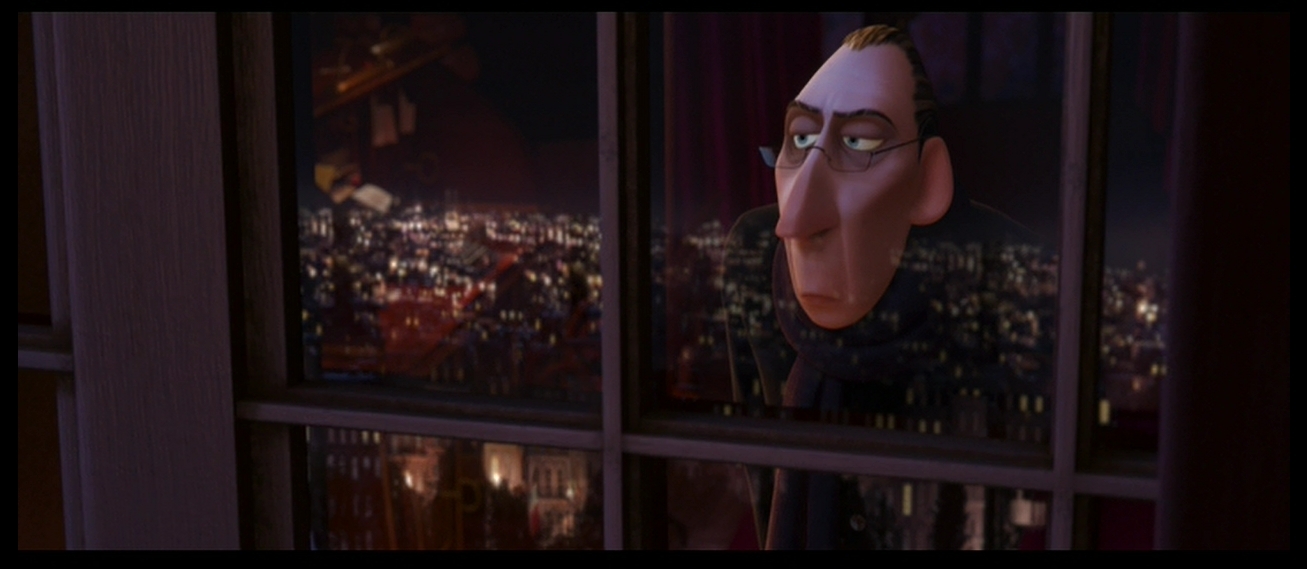
“In many ways the work of a critic is easy. We risk very little, yet enjoy a position over those who offer up their work and their selves to our judgement. We thrive on negative criticism, which is fun to write and read. But the bitter truth we critics must face, is that in the grand scheme of things, the average piece of junk is probably more meaningful than our criticism designating it so.”
For those who don’t know, the above is a quote from the Pixar film “Ratatouille,” which serves as an example of how judgement and criticism can come from an internalised negative world view. Some people, not least within the music industry, take great glee in being the eternal contrarian to other people’s art, perhaps even questioning whether the hours people pour into writing, practicing, recording and performing music are worthwhile, if it doesn’t match up to their idealised view of ‘good.’ Opinions are a difficult ground to negotiate, because there is always a fine line between providing an interesting or possibly ‘hot’ take and shattering someone’s dreams.
Asking as a musician, what gives critics the right to try and take the enjoyment and passion away from what we do? Where do we draw the line between healthy criticism and poor-spirited narcissistic behaviour? How are musicians supposed to take seriously the claims of someone who may very well have no real industry experience or any musical fingerprint by which to be judged? The method of a critic falls flat when it tries to put every output through the same lens, when perhaps the way in which It was supposed to experienced or enjoyed differs from piece to piece. How does a critic achieve a balance between being constructive and their objective right to say as they please? Think about some of the ideas and methods you may have encountered when presenting your opinion, formally or informally on your friends’ music, a local band, a famous band of the past or present, or perhaps even your own songs.
Asking as a critic, why would a musician put themselves into the public sphere, if they weren’t happy to receive the opinions of other people? Existing in one’s own bubble and shunning other people’s perspectives hardly seems a productive way to exist in the music industry, when the melting pot of ideas, personalities and opinions is a glorious place to be at its’ peak. How do we differ between gratuitous music ‘for the sake of’ releasing, and music that actually breaks new ground in a particular genre or scene? Is there value in music regardless of whether it breaks new ground, or are we to assume that a band’s worth is defined by their ability to change minds or provide a unique take on the human condition? Where does your band or music fit into this spectrum? Do bands take enough risks in the 21st century, or have we been conditioned into formulaic ‘popularised’ sounds with slight variations. In contrast to the earlier quote, perhaps the job of a critic is more difficult than people make out, because the ever-shifting landscape of what constitutes ‘popular’, at a grass roots level, headlining at Glastonbury or somewhere inbetween, requires the ongoing commentary to constantly shift and adapt with the times.
Elitism in music scenes
The elite mentality that drives some of the supposedly ‘finer’ genres, can often create an air of inaccessibility to the inexperienced or the general public. Having experienced three years at a popular music University, wherein the ‘cliquey’ nature of particular genres or social groups drives differing interactions, I have seen first-hand the harm that elitist mentalities can do to music and musicality. To see a particular genre of music as an exclusive club, to which only a few may enter or even be considered, in my opinion, takes away from the pure enjoyment that the listener experience can bring. The kick of dopamine that comes from a particular great moment in a song or a live set should not be exclusive to one person because of their status, wealth, intelligence or lifestyle choices. The Groucho Marx mentality of belonging to ‘clubs that would have you as a member’ is a decent blueprint for inclusivity and sharing in one another’s experiences. Furthermore, we also ought to account for those who feel rejected in other areas of society or the music industry, so that their inputs can feel valued by one group or another.
Some of the parameters for creating an ‘elitist’ mentality such as those seen in Jazz clubs or in local metal music scenes, include the use of jargon terms, designed to seem more unique and subsequently keeping the flow of discussion within the community, away from ‘outsiders.’ The pretentious nature at a grass roots level of affecting greater importance to your band because it’s ‘different’ can often leave people with a sour taste in their mouth and instead of creating interest, drives people away. Jazz music now has its place in meme culture through internet creative personalities such as Adam Neely or Simon Fransman, who turn this elitist mentality on its head by formatting their content in such a way that ‘normies’ can feel included on the inside jokes that jazz musicians would have enjoyed for themselves for decades. In fact, it would be prudent to explore YouTube’s role, amongst other social media, in preventing music elitism. The fact that anyone can log on and have access to a world of resources and opinions on all different kinds of genres means that people can self-educate without the barrier of club membership or social standing. How does this affect the institutional nature of music education, and what role does this play in the futures of schools such as BIMM, ACM, ICMP or Waterbear?
Thoughts for the future
The development of the way we think about music and how it affects our interactions in the music industry will be a continually growing discussion. My point about social media continues to occupy the forefront of my thoughts as it creates exciting new avenues for music educators, industry professionals and practitioners. Perhaps we will see the rise in even more online schools, what with the impact the pandemic has had on people’s ability to see one another in the flesh. Whilst this could increase access to information, it does however take away the ability to have the ‘experience’ of going to university and the social learning that provides. The best kind of experiences are the ones that you have in person as you learn more than just information. In the meantime, the marketplace of ideas that the creative arts provide is enough to allow people to participate in discussions without infringing on the artistic aspects of pursuing a career in music.

 Tom C- Blog and Collected Works